Repair and restoration
Almost every rug is repairable.
Frayed ends, unravelling sides, moth holes, a tear from a chair leg, thirty years of a doorway wearing a path. All of it can be rebuilt. The only real question is whether it is worth doing.
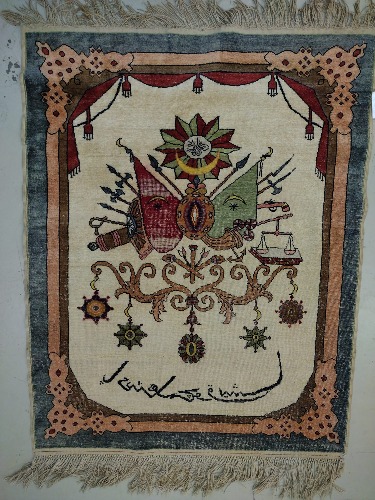
Repair and restoration
Frayed ends, unravelling sides, moth holes, a tear from a chair leg, thirty years of a doorway wearing a path. All of it can be rebuilt. The only real question is whether it is worth doing.
Priority
A rug fails from the outside in. Once the selvedge opens or the end finish goes, the foundation starts unravelling and every month of delay adds inches of loss. Edge work is the cheapest repair in the trade and the one people put off longest.
Open selvedge, missing end finish, an active unravelling edge, a hole that is growing. These get worse on their own.
Moth damage, thin low areas, a tear that is stable but will catch, old repairs pulling loose.
Cosmetic pile restoration, colour touch, out of square blocking, fringe appearance. These do not spread.
Pricing
Repair is handwork, so it is priced on how much of it there is. Edge work goes by the running foot and reweaving goes by the square inch. Reweaving in particular varies enormously with knot density, because matching a 576 knot Qum is not the same job as matching a 100 knot tribal weave. Tell the estimator what is wrong and roughly how big it is.
A minimum charge applies to any repair, which covers setup and handling. Every figure is confirmed in writing after we see the rug, and nothing starts until you approve it.
Process
Front, back, the damaged area up close and something for scale. That is usually enough for a range.
We give you a range and an honest opinion on whether the repair makes economic sense. Sometimes it does not.
Once it is here it is measured, photographed and given a written scope with a firm number. Nothing starts before you approve it.
Most repairs are done after washing, because clean wool matches better and because washing reveals damage nobody spotted.
Foundation rebuilt, then knotted, then trimmed to level. Matched by fiber, dye lot and knot count.
Documented both ways. Useful for insurance, resale and appraisal, and it stays on the rug's record.
Honestly
Reweaving is slow handwork. On a low value machine made rug, a serious reweave is not worth doing, and we will say so instead of taking the job.
Where it is almost always worth doing: any hand knotted rug with sentimental value, any antique, anything of real value, and any edge repair on anything at all, because edge failure only accelerates.
Get an estimate
A photograph of the problem area and one of the back is usually all we need to give you a range and a straight answer about whether to bother.